Accumulating Vs Distributing ETFs
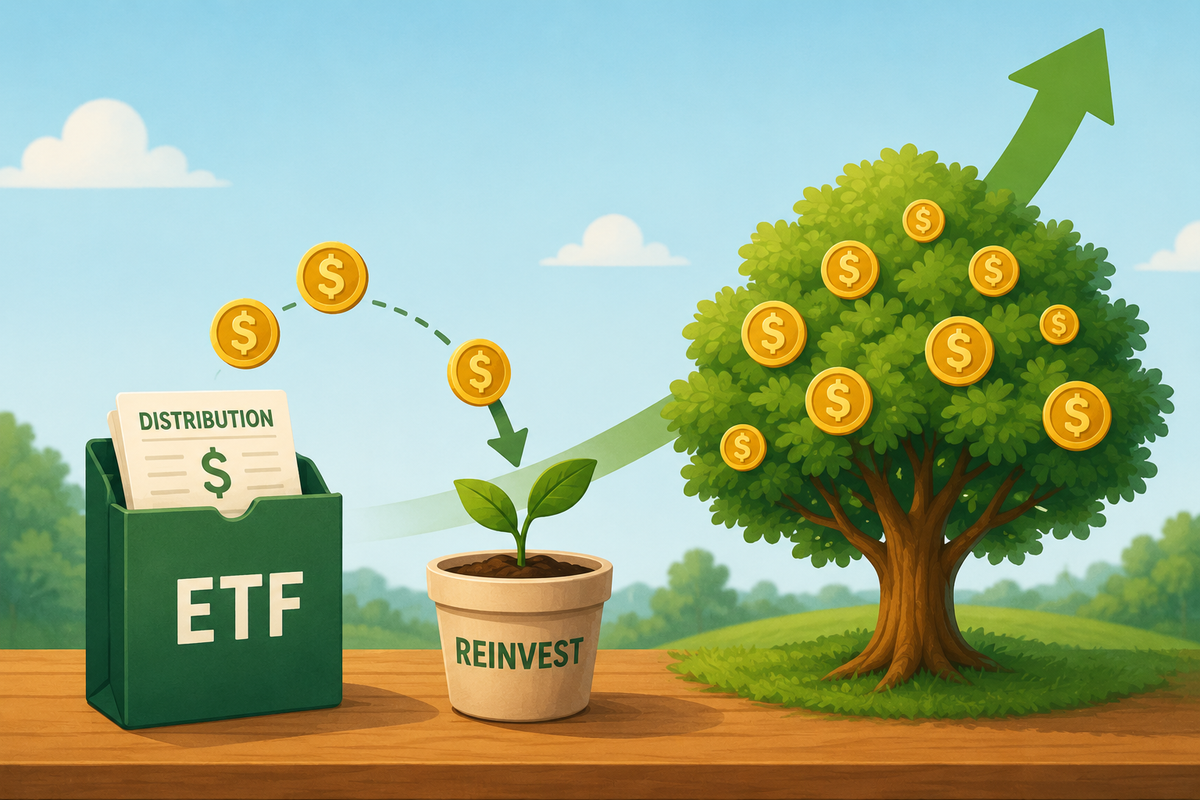
Accumulating and distributing ETFs differ in what happens to income inside the fund and how that income shows up to you. A distributing ETF typically pays dividends (or interest) to shareholders, while an accumulating ETF reinvests that income within the fund and reflects it in the fund’s price. The tax impact depends on your country’s rules for dividend taxation, reinvestment, and whether the ETF is treated like a fund, a corporation, or a partnership for tax purposes.
In many jurisdictions, a distributing ETF creates a visible cash dividend event that may trigger withholding tax and a taxable dividend in your account. An accumulating ETF may still generate taxable income for you even when you receive no cash, because the tax authority can treat the reinvested income as if it were distributed. The key point is that “no cash paid to you” does not always mean “no tax due.” I’ve seen account statements where the accumulating share class shows no dividend line item, yet the tax report still includes income amounts tied to the fund’s distributions.
Practical examples help. If you hold a distributing ETF in a taxable account, you may receive dividends quarterly or semiannually, and your broker may show foreign withholding tax. If you hold an accumulating ETF, you may see the net asset value rise over time, but your tax form may still report income or an imputed distribution. The difference can matter most in countries that tax reinvested fund income annually, or that apply special rules for non-cash distributions.
Common Tax Pain Points
Investors often assume that accumulating ETFs are automatically “tax-free” because they do not pay cash dividends. That assumption fails in jurisdictions where fund income is taxed annually regardless of whether it is paid out. Another frequent mistake is treating the ETF’s label as a guarantee of tax treatment; the same underlying index can be packaged into different share classes with different tax reporting outcomes.
Tax outcomes also depend on the ETF’s legal structure and domicile. Many ETFs are organized under specific fund regimes, and the tax authority may apply rules based on the fund’s status, the investor’s residency, and the source of income. Dividend withholding tax on foreign dividends can still apply even when the ETF reinvests the net amount. If the fund invests in multiple countries, the withholding pattern can be complex, and your broker’s tax report may show multiple withholding rates.
Supporting technologies and dependencies affect what you see. Brokers rely on corporate action feeds, fund distribution schedules, and tax reporting mappings. When a fund changes share class details or when a corporate action is processed late, the reported amounts can shift between tax years. I once reviewed a tax report where the broker’s “income” line for an accumulating ETF lagged the fund’s declared distribution date by a few weeks, which changed the tax year classification for the investor.
Finally, account type changes the rules. Taxable accounts, tax-deferred retirement accounts, and tax-exempt accounts can treat ETF income differently. A distributing ETF might be taxed in a taxable account but sheltered in a retirement account, while an accumulating ETF might still create annual tax reporting in a taxable account. The same share class can behave differently across account types because the tax authority’s trigger event changes.
How To Compare Tax Impact
Check Your Jurisdiction And Account Type
Start with where you are tax-resident and what account holds the ETF. In many countries, dividend withholding tax and annual fund income reporting differ between taxable and retirement accounts. If you are in a jurisdiction that taxes fund income annually, an accumulating ETF can still produce taxable income even without cash payments. If you are in a jurisdiction that taxes only when cash is distributed, the distributing ETF may create more frequent taxable events.
Use your broker’s tax documentation to confirm the pattern. Look for terms like “dividend,” “income,” “withholding,” and “fund distribution” on your annual tax statement. If you see a line item for an accumulating ETF that resembles income reporting, the tax authority likely treats reinvested income as taxable. If you do not see any income reporting, that does not automatically mean no tax; some brokers show it under different labels or net it into capital gains reporting.
Compare Cash Flow Versus Tax Reporting
Build a simple comparison between the ETF’s distribution policy and how your tax form reports it. For a distributing ETF, you can often match cash dividends to tax forms and foreign withholding. For an accumulating ETF, you may need to match the fund’s declared distribution information to the broker’s reported income. Many fund providers publish distribution announcements and ex-dividend dates, and those dates can help you reconcile tax year boundaries.
In practice, the “tax drag” can differ. A distributing ETF may create cash that you can reinvest, but it also creates taxable events and potential withholding. An accumulating ETF may defer cash reinvestment decisions, yet it can still create annual tax liabilities that you must fund from other sources. That mismatch matters if you rely on the ETF for living expenses or if your cash flow is tight.
As a small aside, I often see investors focus on the ETF’s total return chart while ignoring the tax report. A total return chart assumes reinvestment without tax friction, so it can look smoother than the after-tax outcome.
Model After-Tax Outcomes With Real Inputs
Use a conservative model with inputs you can verify: expected dividend yield, expected withholding tax rate, your marginal tax rate, and whether the accumulating ETF triggers annual taxation. If your jurisdiction taxes dividends at a different rate than capital gains, the share class choice can shift the mix of taxable income versus later capital gains. For example, distributing ETFs can convert some return into dividend income, while accumulating ETFs can shift more of the return into price appreciation that becomes taxable upon sale.
Because withholding tax rates vary by country and treaty relief, do not assume a single rate. Your broker’s tax statement from the prior year can show actual withholding amounts and can be a better starting point than the fund’s marketing materials. If you are comparing two ETFs with similar holdings, the main difference often comes from how income is distributed and reported, not from the underlying market exposure.
Review Costs And Tax Friction Together
Share classes can differ in fees, hedging costs, and distribution mechanics. Even when fees are similar, the tax friction can dominate the outcome. A distributing ETF may have slightly higher operational friction because you receive cash and may reinvest it, while an accumulating ETF may reduce cash handling but can still create tax liabilities. If you face trading costs or bid-ask spreads when reinvesting dividends, the distributing ETF’s after-tax return can worsen.
Also check whether the ETF is currency-hedged. Currency hedging can create additional taxable events in some jurisdictions or change the timing of gains and losses. The tax treatment of FX hedging instruments is jurisdiction-specific, so you need to rely on your broker’s tax reporting and the fund’s tax documentation rather than assumptions.
Case Examples With Realistic Constraints
Scenario 1: Taxable Account, Foreign Dividends. An investor in a taxable account holds an accumulating ETF that invests in U.S. and European equities. The investor receives no cash dividends, but the broker’s annual tax report shows a line for “fund income” and foreign withholding amounts. The investor pays tax on that reported income even though the ETF reinvested it. When the investor sells the ETF later, the capital gain calculation may reflect the cost basis and prior tax reporting, so the earlier tax does not disappear; it changes the timing.
Scenario 2: Retirement Account, Dividend Cash Flow. A different investor holds a distributing ETF inside a retirement account that is tax-sheltered for qualified withdrawals. The broker records dividend payments as cash inside the account, and the investor reinvests them without triggering current-year tax. The accumulating ETF would also be sheltered, but the investor prefers distributing shares because the cash dividends help fund rebalancing. In this scenario, the share class choice affects cash management more than tax, because the account wrapper changes the tax trigger.
Comparison Checklist For Share Classes
| Decision Factor | Distributing ETF | Accumulating ETF | What To Verify |
|---|---|---|---|
| Cash to You | Dividends paid to the account | No cash dividends to the account | Broker shows dividend cash and reinvestment policy |
| Tax Trigger Timing | Often at dividend payment dates | Often at annual reporting or deemed distribution | Tax statement labels for “income” vs “capital gains” |
| Foreign Withholding | Withholding can appear on dividends | Withholding can still apply inside the fund | Actual withholding amounts on prior-year tax forms |
| Reinvestment Friction | You decide when to reinvest cash | Reinvestment happens inside the fund | Trading costs and bid-ask impact on reinvestments |
| Sale Tax Profile | More return may be dividend-taxed | More return may be price-gain-taxed | Capital gains rules and holding-period treatment |
If you want a step-by-step checklist, use this order: confirm your tax residency and account type, read the broker’s tax statement for the last year, compare how the broker labels income for each share class, reconcile with the fund’s declared distribution dates, then run a simple after-tax cash flow estimate using your marginal rates and withholding amounts.
Common Mistakes To Avoid
One mistake is comparing only the ETF’s headline yield or total return without checking how the broker reports income. Another mistake is assuming that accumulating ETFs avoid withholding tax; withholding can occur at the source country level before the fund reinvests. A third mistake is ignoring currency hedging and its potential effect on gains and losses reporting.
Investors also confuse fund-level reinvestment with investor-level tax deferral. Reinvestment changes the form of return, not always the tax timing. If you see an accumulating ETF with no cash dividends, you still need to check whether your tax report includes income amounts tied to the fund’s distributions.
Some investors switch between share classes mid-year and then struggle to reconcile tax reporting across tax years. If you plan to change, track the ex-dividend dates and the broker’s corporate action processing dates. I’ve watched investors lose hours because they relied on the fund’s announcement date instead of the broker’s “payment date” field.
Finally, avoid using generic advice from forums without matching it to your jurisdiction and account type. Tax rules for fund income, deemed distributions, and foreign tax credit mechanisms vary enough that a rule that fits one country can fail in another.
FAQ
Do Accumulating ETFs Still Trigger Tax?
In many jurisdictions, accumulating ETFs can trigger tax through annual fund income reporting or deemed distributions even when you receive no cash. Your broker’s tax statement is the most direct way to confirm what your account actually reports.
How Do Foreign Withholding Taxes Differ?
Foreign withholding can apply at the source country level for both distributing and accumulating ETFs because the fund receives dividends net of withholding. The difference is how and when your broker reports the income and withholding to you.
Which Share Class Is Better In A Taxable Account?
The better choice depends on your local rules for dividend taxation versus capital gains, and whether accumulating ETFs are taxed annually. Compare your broker’s historical tax reporting for each share class and model after-tax cash flow.
Do Retirement Accounts Treat Both ETF Types The Same?
Many retirement accounts shelter investment income, so the tax trigger may be deferred until withdrawal. The share class can still affect cash flow inside the account, which changes rebalancing behavior.
What Documents Should I Review Before Buying?
Review the ETF’s distribution policy and share class description, plus your broker’s tax reporting examples for that share class. If available, check the fund’s annual report notes on income allocation and the broker’s fields for income, withholding, and capital gains.
Author's Insight
Accumulating versus distributing ETFs changes the investor’s cash experience, but tax outcomes hinge on jurisdiction-specific rules for fund income and deemed distributions. Brokers translate fund events into tax statement fields, so the most reliable evidence comes from prior-year tax reporting for the exact share class and account type. When investors model only market returns, they miss timing effects where tax is due before cash is received. A careful comparison uses the broker’s labels, the fund’s declared distribution schedule, and your local dividend versus capital gains treatment.
Key Takeaways
- Accumulating ETFs can still create taxable income even without cash dividends, depending on local rules.
- Distributing ETFs often create more visible dividend events, which can trigger withholding and dividend taxation.
- Your broker’s tax statement fields (income, withholding, capital gains) are the fastest way to validate the real tax pattern.
- Account type and jurisdiction drive the outcome more than the ETF’s marketing labels.
- Reconcile ex-dividend and broker processing dates to avoid tax-year confusion.