Learning the 60/40 Mix
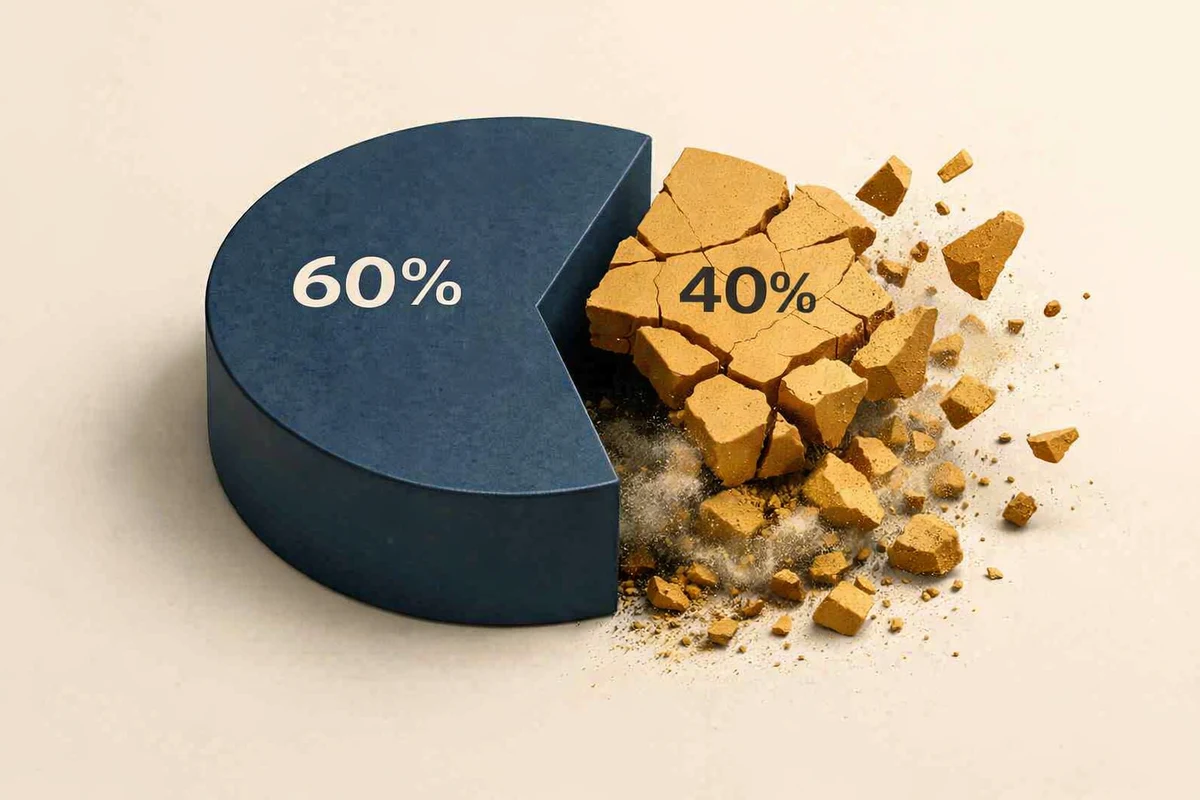
The 60/40 portfolio splits investments into 60% stocks for growth and 40% bonds for stability and income. This mix has been a staple for decades, dating back to principles established in the 1950s and 1960s. For example, during the 30 years ending in 2022, a 60/40 portfolio returned an average annualized 8%, with volatility roughly half of an all-stock portfolio. That balance aims to capture upside while cushioning downturns.
Take a mid-career professional with $100,000 savings. Allocating $60,000 in diversified equity funds and $40,000 in bond funds sets a foundation that doesn’t demand constant adjustments but responds steadily to market shifts. Approximately 60/40 funds now exist on popular brokerages like Vanguard and Fidelity, reflecting sustained investor demand.
What Derails Many Investors
Overconfidence and chasing trends often undermine balanced portfolios. Investors might overload stocks during bull markets or flee to cash in downturns—both actions that disrupt the 60/40 allocation and increase risk. Too much turnover also eats into net returns, a detail overlooked by many newer investors.
Another common error is ignoring bond quality and duration. A 40% bond slice made up solely of long-term high-yield bonds deviates widely from the safety that bonds generally provide. That mistake inflates risk rather than mitigates it.
Finally, costs and tax inefficiencies slip by unnoticed. Choosing funds with 0.1% fees versus 1% fees compounds vastly across decades. Investors rarely grasp that $500,000 at 1% fees loses an extra $31,000 versus 0.1% over 10 years.
Building Your 60/40 Portfolio
Choose Low-Cost Index Funds
Index funds deliver broad market exposure without stock-picking risk. S&P 500 ETFs like Vanguard’s VOO carry expense ratios as low as 0.03%. Bond funds like the Vanguard Total Bond Market ETF (BND) provide equivalent improvements on bond diversification. Cost explains why this works: less fees mean more returns staying in your pocket.
Diversify Within Equities
Large-cap U.S. stocks are about 50–60% of typical equity allocation. Adding mid- and small-caps or international stocks improves diversification. For example, an allocation could break down to 40% large-cap, 10% mid/small-cap, 10% international, maintaining 60% total equity.
Investors who ignore this nuance face uneven exposure to risks tied to single sectors or geographies.
Select Bonds Based on Risk and Duration
For the 40% bond slice, blending short- and intermediate-term treasury and corporate bonds reduces interest rate sensitivity. Long-term bonds tend to react more to rate changes—less predictable. A typical bond allocation might be 25% short duration, 15% intermediate duration bonds.
The Vanguard Short-Term Bond ETF (BSV) and the Total Bond Market fund (BND) make solid choices here.
Rebalance Regularly
Stick to your target. If stocks surge past 65%, sell equities and buy bonds to restore 60/40. Automatic rebalancing tools available on Fidelity and Schwab let you schedule quarterly or semiannual adjustments, enhancing discipline while minimizing emotional trades.
Use Tax-Advantaged Accounts
Place bonds in tax-deferred accounts like IRAs or 401(k)s to avoid higher tax impact on interest income. Hold equities in taxable accounts since qualified dividends and capital gains get favorable rates. This tax placement optimizes after-tax return.
Start Small, Scale Quickly
You don’t need $100,000 to start; many ETFs allow purchases for under $50. Robinhood launched fractional shares years ago, which helps investors with $500 or $1,000 dollar portfolios get similar exposure. The earlier you start, the more time compounding has.
Watch Fees Consistently
Fees that look small at 0.2% or 0.5% add up over decades. Set calendar reminders annually to check fund fees. Morningstar and ETF.com offer updated fee trackers helpful for this process.
Consider Automatic Contributions
Regular monthly contributions help smooth out market volatility through dollar-cost averaging. Use tools like Betterment or M1 Finance to automate contributions aligned with your 60/40 splits. It rarely works the way the docs say without automation.
Examine Historical Returns
A 60/40 portfolio held steady during the 2008 crisis, declining about 20%—far less than most pure equity portfolios. Over five years ending 2023, it grew roughly 6% annually, slower than the S&P 500 but with half the drawdowns. Those trade-offs fit many conservative or moderate investors.
Real Portfolio Examples
Case one: A tech worker in New York assigned 60/40 using Vanguard ETFs (VOO for stocks, BND for bonds) in 2015. She contributed $500 monthly via Schwab. After seven years, her portfolio outpaced a pure stock index by about 3% annually on a risk-adjusted basis and avoided >30% drawdown during COVID-19 selloff.
Case two: A retiree switched to 60/40 from a previously 80/20 mix in 2019 after market highs. Using Fidelity funds FSKAX (stocks) and FTBFX (bonds), the switch preserved capital during the 2020 downturn and matched income needs. Three years later, they reported stable income with a steady portfolio value.
Portfolio Component Comparison
| Component | Funds/ETFs | Typical Fees | Risk Level |
|---|---|---|---|
| Large-Cap Stocks | VOO, FSKAX | ~0.03% | Moderate |
| Mid/Small Cap | IJR, FMAGX | 0.06–0.15% | Higher |
| International Stocks | VXUS, VEU | ~0.08% | Moderate-High |
| Short-Term Bonds | BSV | 0.05% | Low |
| Total Bond Market | BND, FTBFX | 0.04–0.09% | Low |
Common Errors and Fixes
Ignoring fees. Fix: check fund fees yearly, switch if above 0.2%. Overconcentration in one sector or geography. Fix: diversify your stock allocation internationally and across market caps. Skipping rebalancing, which leads portfolios to drift into unintended risk exposures. Set quarterly rebalancing reminders. Holding the wrong bonds – long duration bonds in taxable accounts spike tax bills. Fix: put bonds in tax-advantaged accounts.
Chasing performance yearly is another big mistake. Fund X might beat for one year but lag the next five. Reacting to every market headline leads to “portfolio whiplash.”
FAQ
What is a 60/40 portfolio?
It splits investments into 60% stocks and 40% bonds to balance growth and reduce risk.
How often should I rebalance it?
Quarterly or biannually, depending on your trading costs and comfort with market swings.
Which funds are best for a 60/40 portfolio?
Low-cost index ETFs like Vanguard's VOO for stocks and BND for bonds work well.
Can I start a 60/40 portfolio with little money?
Yes, fractional shares and ETFs allow starting with under $100.
Is 60/40 still relevant in 2024?
Yes, it’s a dependable foundation for moderate risk tolerance and long-term investing.
Author's Insight
Personally, I built my first 60/40 portfolio in 2016 using mostly Vanguard funds and automated quarterly rebalancing through Fidelity. The low fees and diversification helped me avoid the urge to tinker during market dips. The portfolio didn’t deliver spectacular gains, but it stayed resilient during multiple pullbacks, keeping my goals on track. Simplicity makes maintenance painless, especially when life demands your attention elsewhere.
Key Points
The 60/40 portfolio still deserves a place in many investors’ toolkits. Its allocation offers measured growth with a cushion against volatility. Focus on low-cost index funds, purposeful diversification, regular rebalancing, and tax-smart fund placement to save thousands over time. Start small, add consistently, and resist the urge to overhaul when markets move. Momentum builds quietly here.